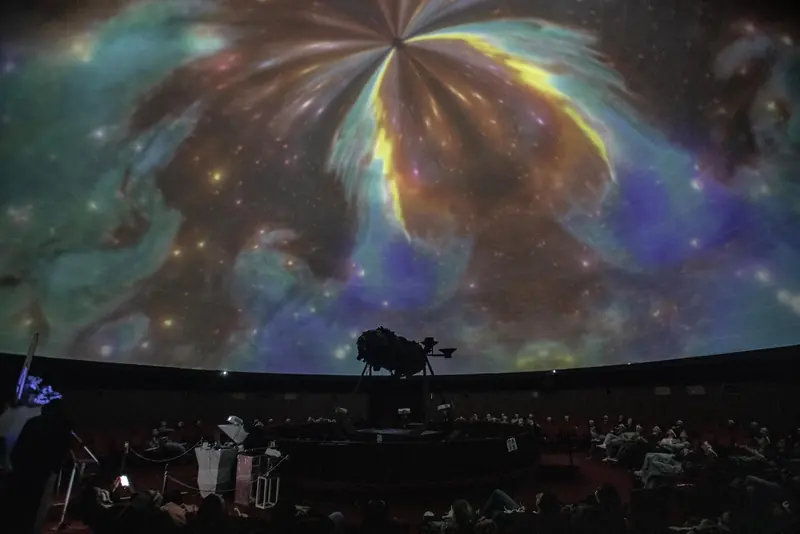
Fulldome · Rosario Planetarium
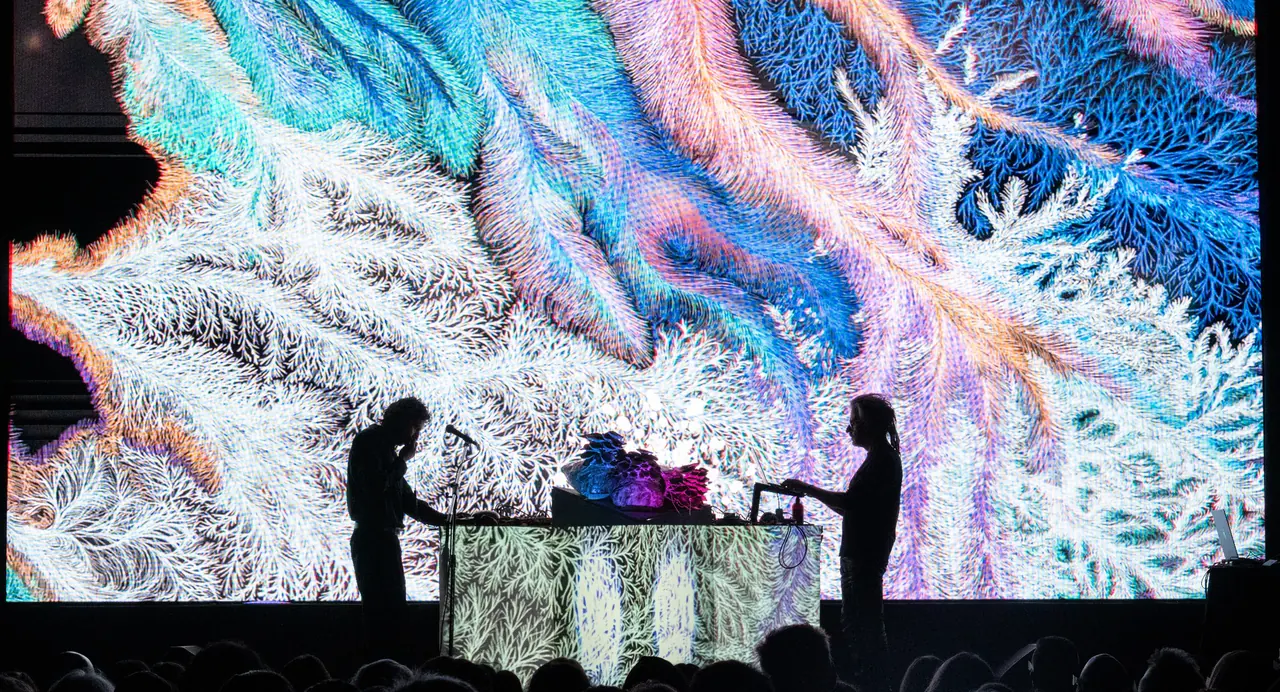
The screen is imposing and the visuals take the lead. Maximum visual immersion.

Biópera is an experimental bioart opera: living fungi, sound and image in real time, and a story told from the fungal kingdom. A work created by Alejandro Sorin and Federico Seineldin.
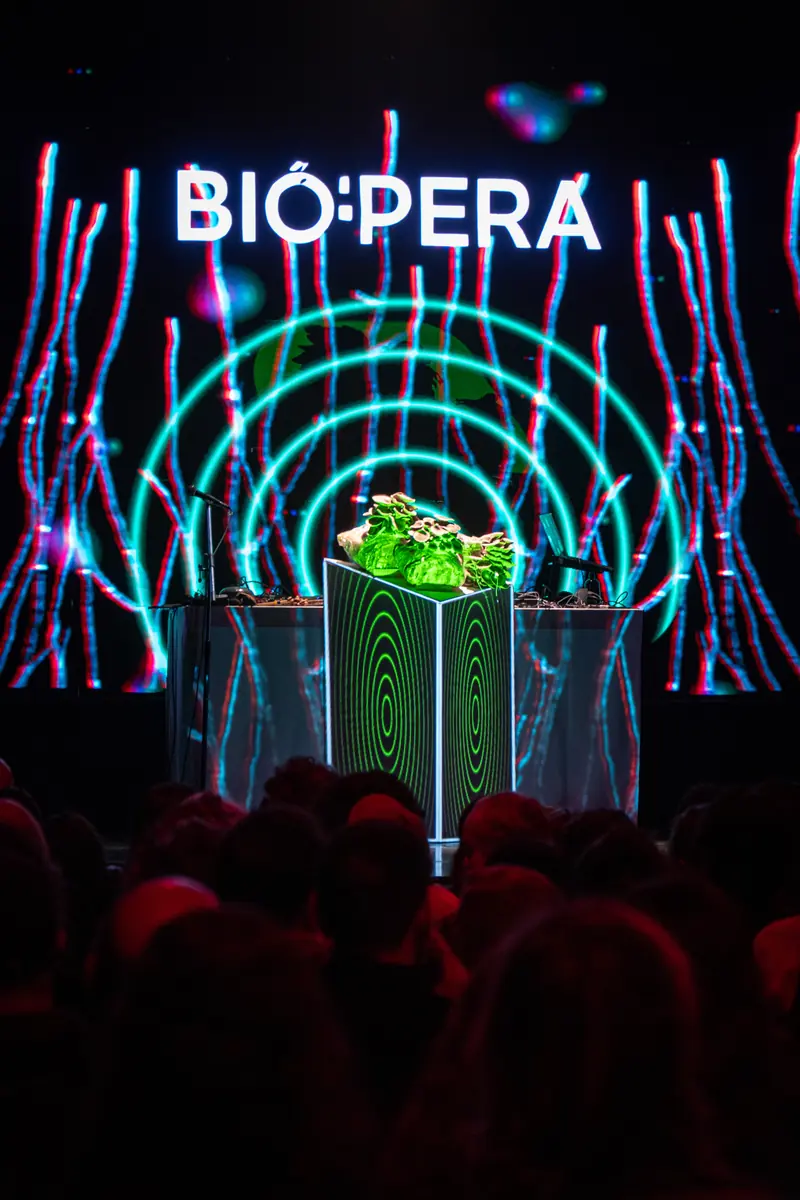
Experimental bioart opera with live fungi
Biópera is an experimental bioart opera with live fungi, at the intersection of live cinema, sound art and interactive art: a stage work with music, soundscapes, dramaturgy and staging. The electrical activity of living fungi is material for co-creation: it modifies and generates the sound and the image.
Biópera is an opera of life. Bio + opera: a work in which the one who pulses the score is alive and belongs to another kingdom.
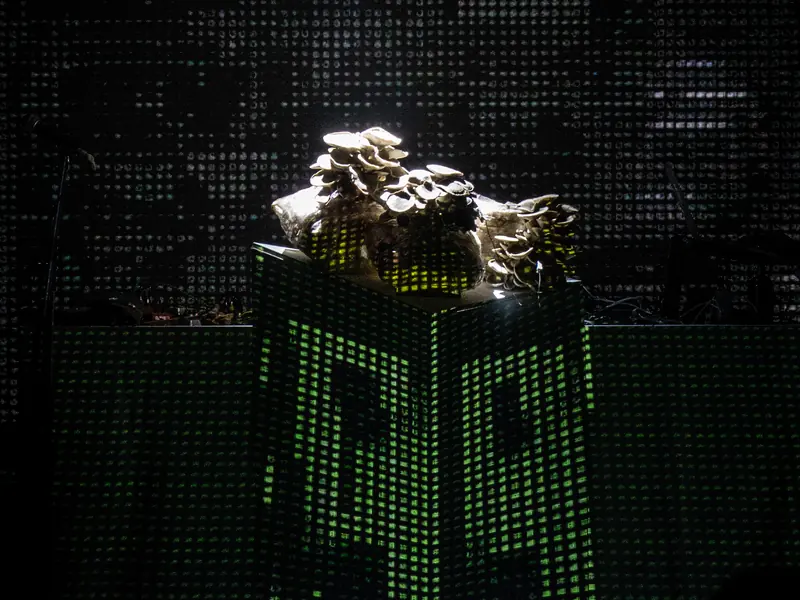
A room in half-light. At its center, a substrate colonized by mycelium, with two electrodes that record, without harming it, how its electrical conductivity changes from moment to moment.
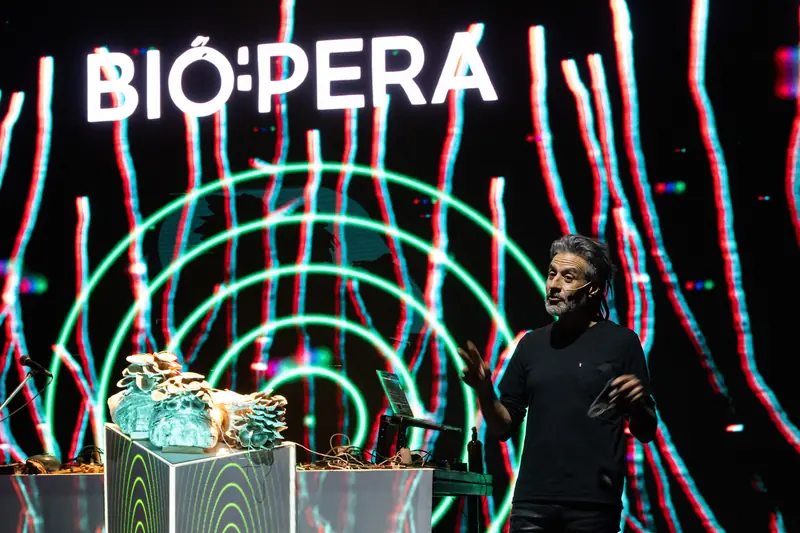
The prologue is part of the work. Fede demonstrates live how the same signal sounds different depending on the instrument, and how it modifies the image. That is where two things become clear at once: that the signal is real, and that the sound is a decision.
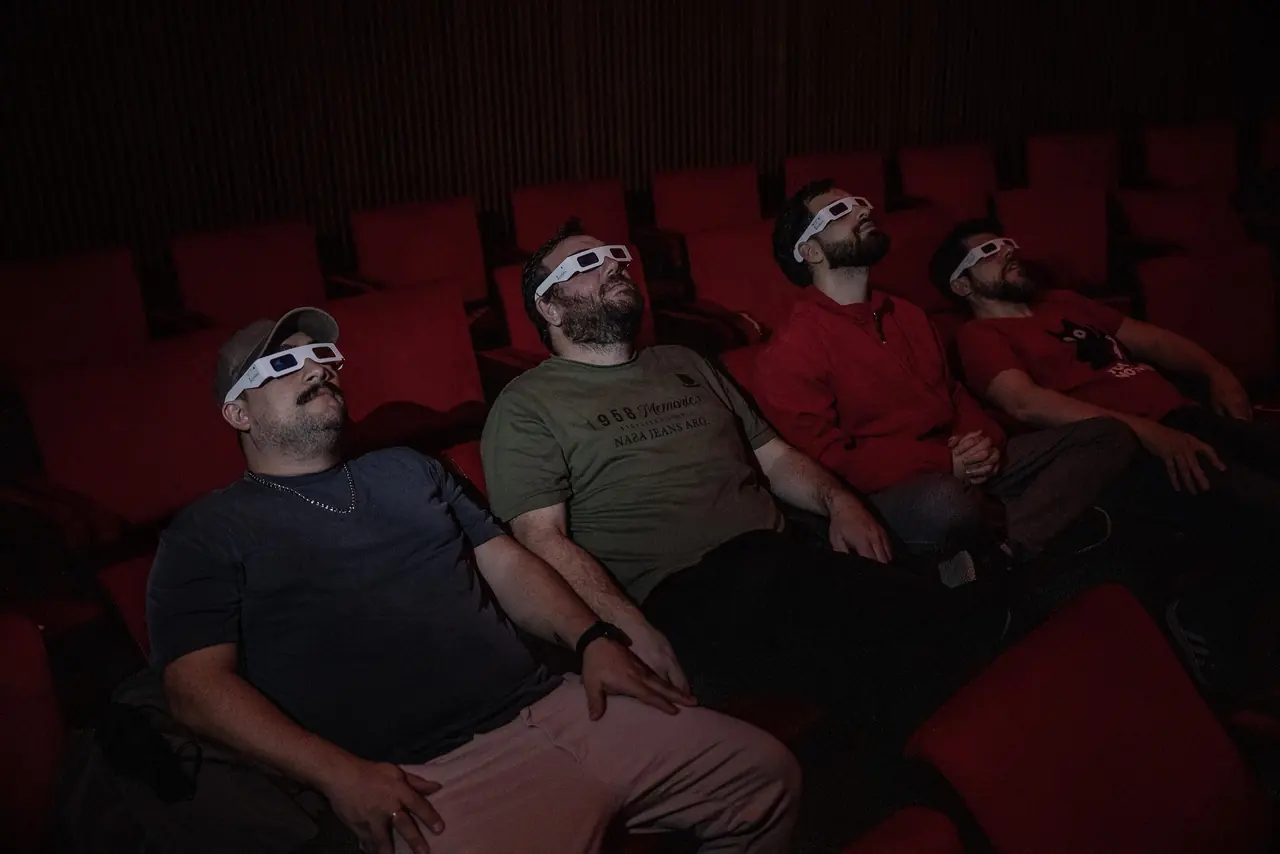
Then, with 3D glasses on, the work begins. Three people work live on that signal, and the journey alternates almost silent passages with others of great intensity.
The fungal kingdom, why the project exists and a demonstration of how the signal is read. It frames the story within speculative design and ends with a guided breathing that lowers the pulse of the room.
Live music and image on the fungus's signal, along a story told from the fungal kingdom.
At one point, the work can become overwhelming. That is by design.
The story
The story speaks from the fungal kingdom. It traces the history of life, from its first appearance to our present, and asks what place we occupy in it and what we do with that place.
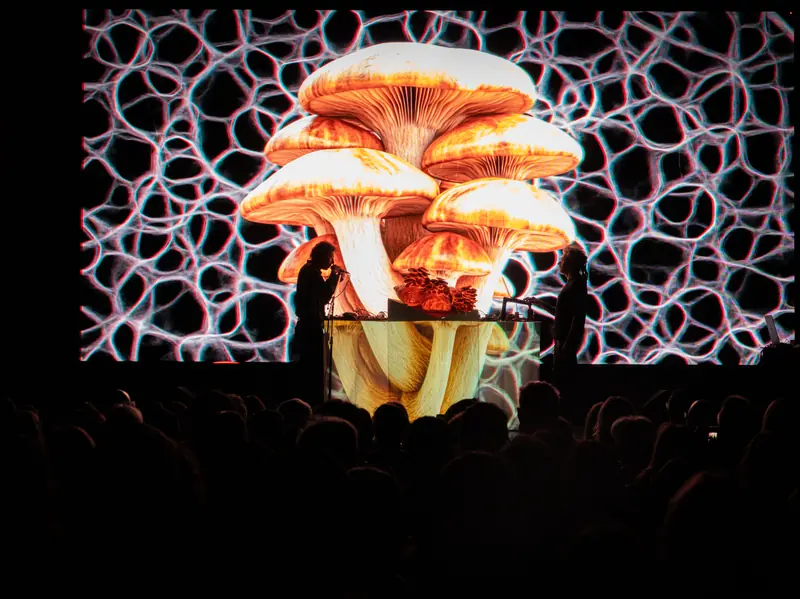
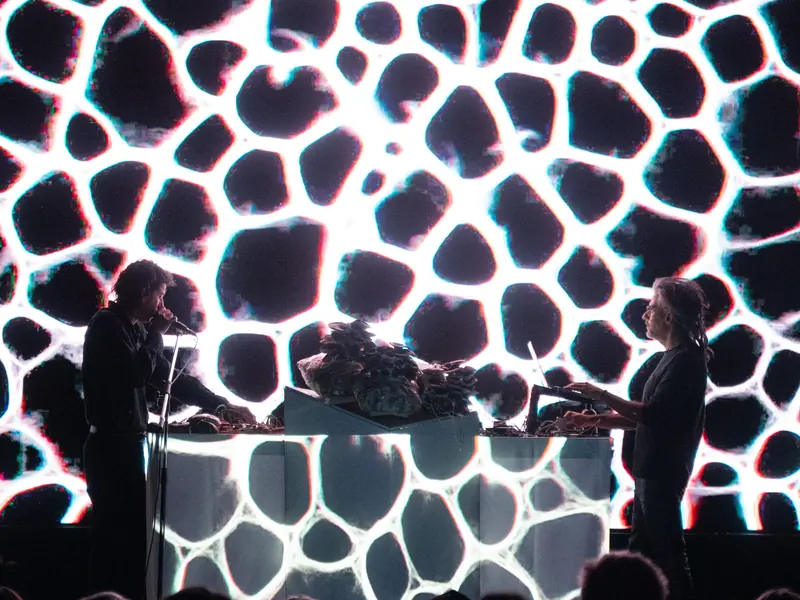
It is a prophecy and, at the same time, a call to action. Speculative design imagines a possible future and makes it vivid so that we want to avoid it. That is why it is measured the opposite way from any forecast: it is right when it does not come true.
Biosynthesis
We place two electrodes on it and pass a minimal, harmless current through it. What we measure is how hard it is for that current to pass: the conductivity of the tissue changes from moment to moment with the water that circulates, the ions and the activity of its cells. Those fluctuations are the signal.
The device turns them into pulses, notes and control voltages, the same language used to drive a modular synthesizer. And those pulses become sound and image. That is what we call biosynthesis: electronic synthesis from a biological signal.
The fungus produces the fluctuations: when it changes, how much, at what rhythm. We do not control that, and what happens around it also matters: humidity, temperature, a touch. We decide everything else: how sensitively we listen, which changes become notes, in what scale, on which instrument it sounds.
The fungus generates and modifies; the reading is human. That distance between the signal and its reading is the material the work is made of.
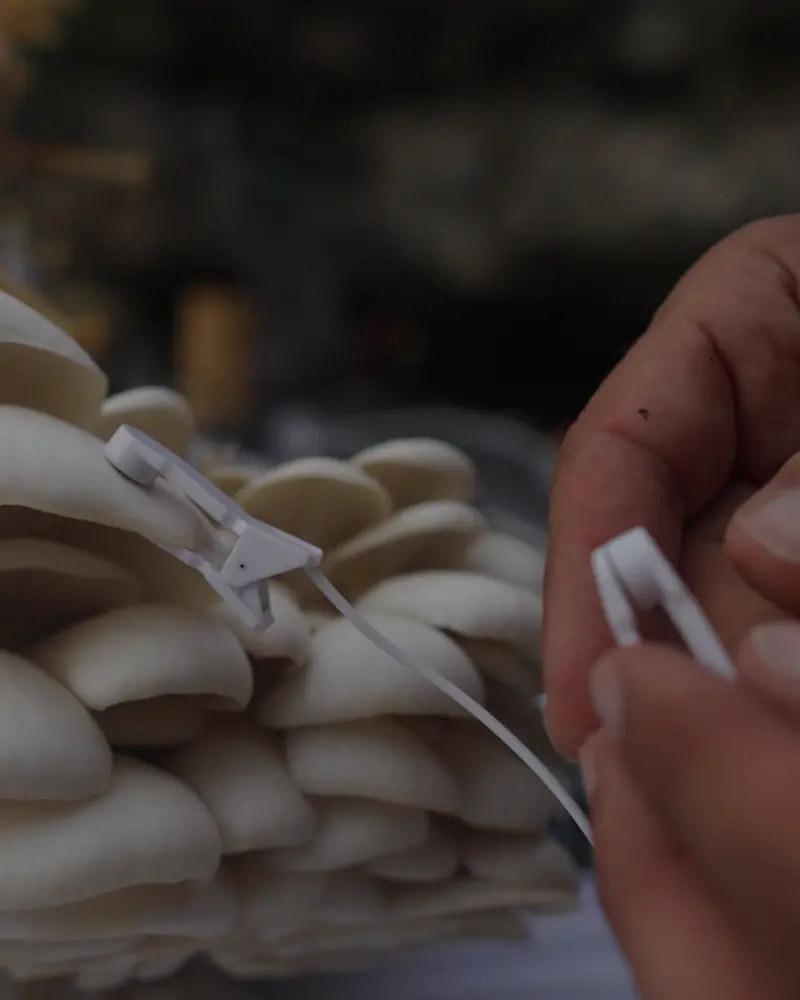
There are two sources of variation, and both are alive. The first is the fungi: their electrical activity changes from one performance to the next depending on their state, their humidity, their age, and the temperature and light in the room.
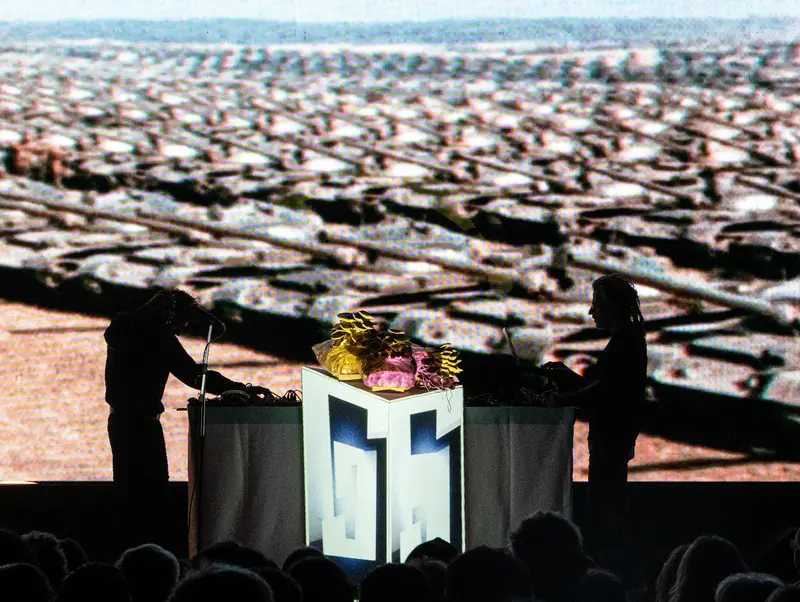
The second is us. Fede modulates the signals in real time, Darvin plays in response to what is heard, Ale intervenes in the image, and what each one does goes back into the system and changes what the other two read. It is a loop of four participants: three people and a living organism.
It is an interspecies ritual: an encounter between art, science and audience.
The starting point is a sensor connected to a living organism. On that signal, Biópera builds a work: visuals that sustain a story, an operatic narrative and three people who improvise live alongside the fungus. For an hour, the organism and the artists form a loop that feeds back on itself.
What you hear are human decisions about living signals, and the work makes this visible from the prologue on. That transparency is part of what Biópera wants to convey: an attentive, curious and honest listening to another kingdom.
The fungus is on stage, and its signal is read as the performance unfolds.
The same reading modifies and generates the music and the visuals at once.
What is read from the fungus sustains a dramaturgy from beginning to end.
Before the work, Fede tells what the fungal kingdom is and demonstrates live how the fungus's signal is read.
The music
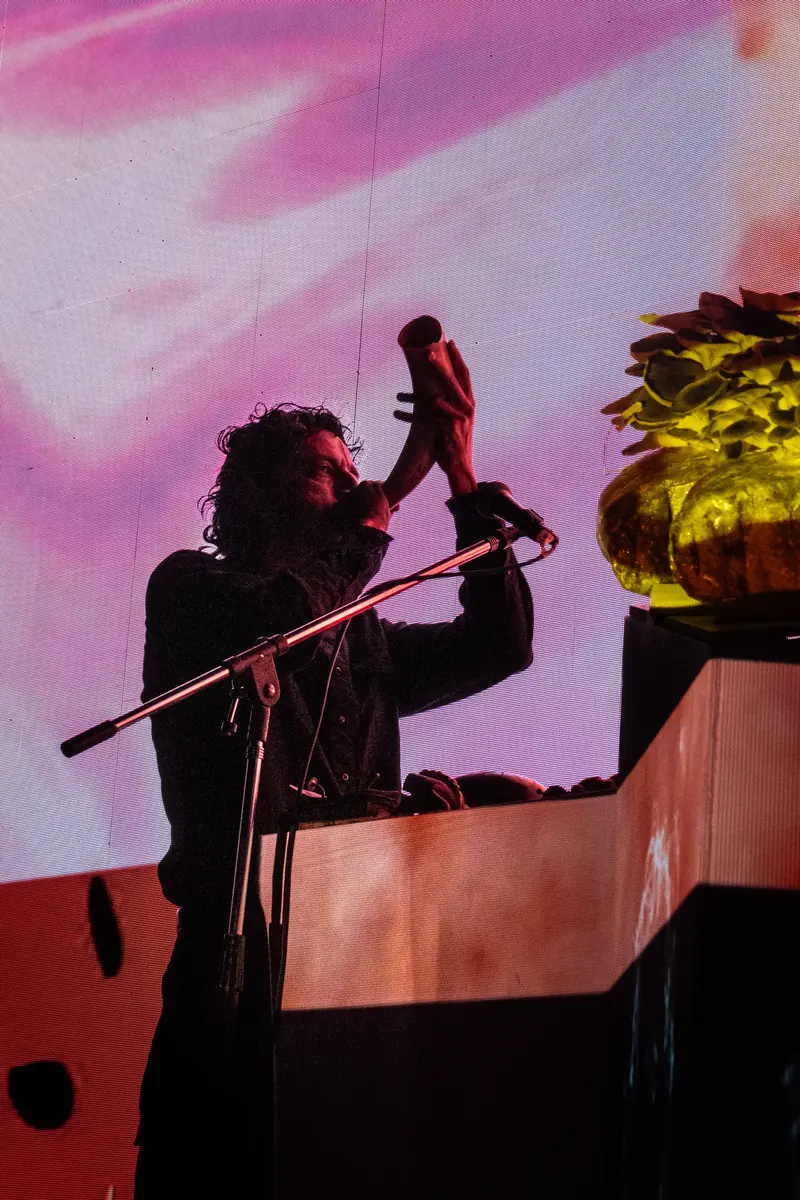
The starting point is the fungus's signal, which arrives in slow, irregular pulses. Fede modulates it in real time; on top of it, Darvin Elisondo builds percussive bases with electro-organic instruments and loops, and sustained layers with binaural beats and single-note drones.
The result is in dialogue with ambient, drone and free improvisation. Across the work the dynamics change a great deal: there are almost silent passages and others of a density that envelops the room.
Part of them is pre-built; another part appears, disappears or transforms according to the fungus's fluctuations and Ale Sorin's live interventions.
And the work also changes with the place. It has been presented in a planetarium, in theatres and in a cenote, sometimes with 3D glasses and sometimes with silent headphones, and each space forces it to be reconfigured. To what the fungus brings is added the shape the work takes in each venue: no one knows entirely what they will find.
The screen is imposing and the visuals take the lead. Maximum visual immersion.
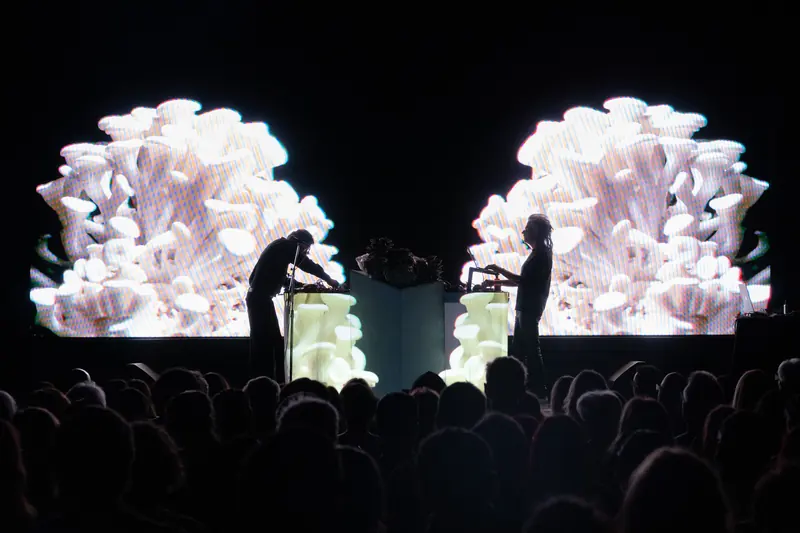
Musicians and fungi a few steps from the audience. Physical presence and performance come first.
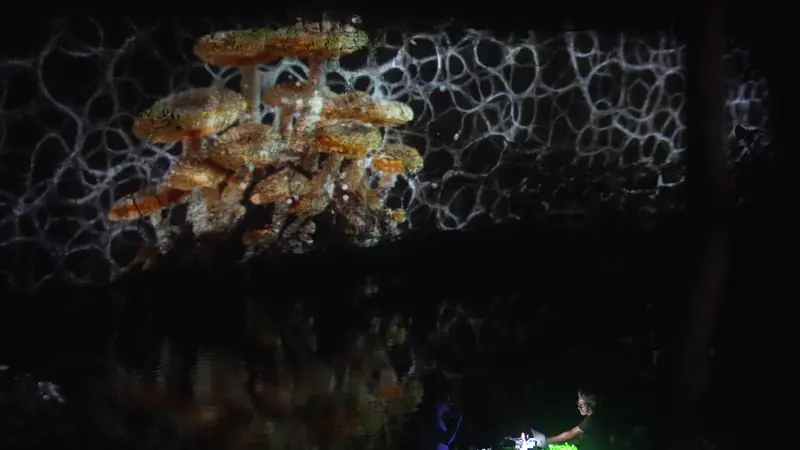
A cenote: a 30 × 10 metre projection on the stone wall. The texture makes the image secondary and the musicians come to the fore.
Three paths that rarely cross, in a single work.
Biópera brings together artists from different disciplines: videomapping and film, research with sensors and signals from living organisms, and sound improvisation. That difference is part of the work. Each performance is built among the three, on the fungus's living signal.
The same three of us make up Oscilatorio, a parallel project —with no script or story— where we play with the experimentation and performance of sonic and visual arte-facts and their drifts. @oscilatorio_
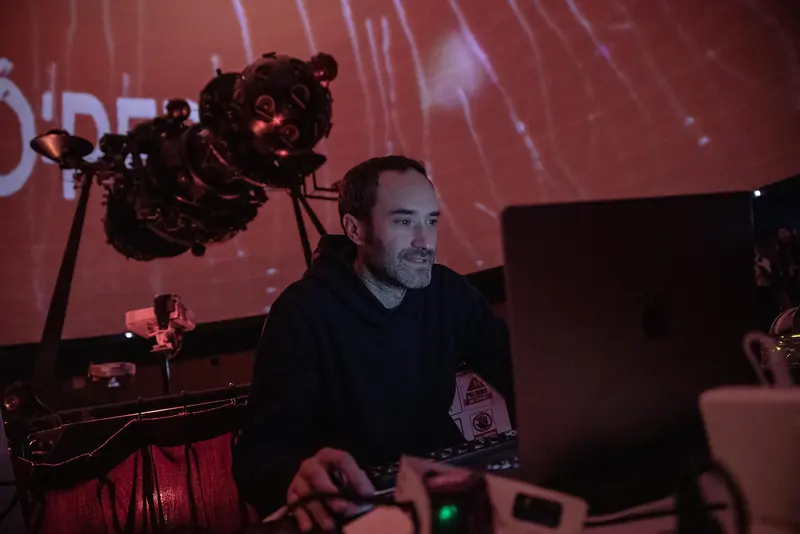
Visuals, videomapping and conceptual development · Visual biosynthesis · Creation · Artistic production
Filmmaker, producer and visual artist with more than twenty years of audiovisual experience, specialized in videomapping, editing and post-production. Built a career in Argentina, Canada, Mexico and Uruguay. Studied Image and Sound Design at the University of Buenos Aires. Ale's short film Retiro won best director in Hollywood and was highlighted in Paris and Buenos Aires in 2019. In Biópera, Ale creates an immersive visual environment with pre-composed and generative images that react in real time to the sound and to the fungus's signals.
Instagram @alesorin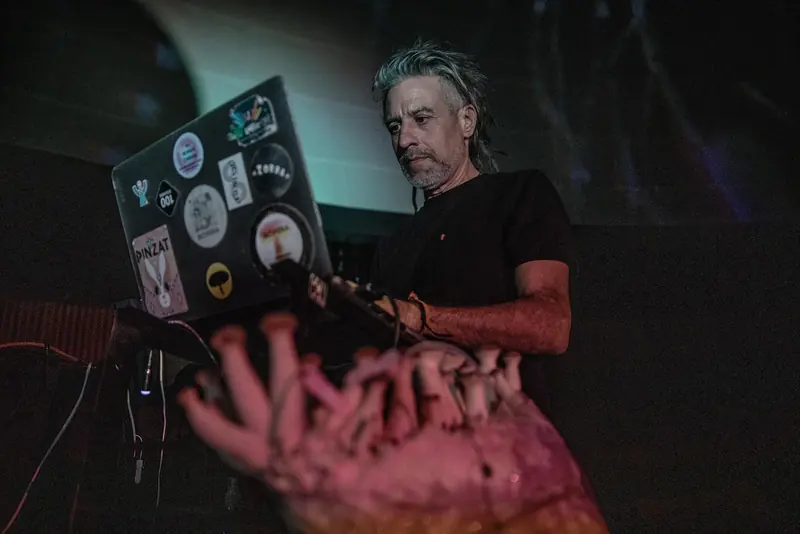
Biosynthesis and modulation of the fungi's sound · Conceptual development · Presentation · Creation · Artistic production · Executive production
Sound artist and entrepreneur. Founded and led technology companies with social impact: Openware, Njambre and Arbusta. In 2015, received the Creativo Argentino award from the Círculo de Creativos Argentinos for innovative solutions at the intersection of technology, the environment and society. Works with analog sound and develops boards and sensors with open technologies. In Biópera, Fede modulates the fungi's signals in real time to transform them into sounds and landscapes suited to the human ear, and presents the prologue of each performance. Published the poetry book Liminal and an LP of experimental music.
Instagram @fede.say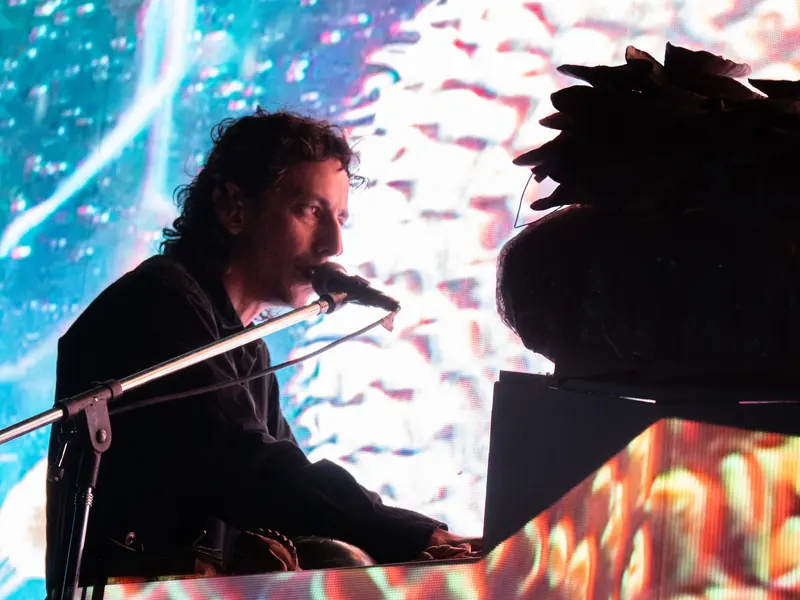
Improvisation with electro-organic instruments · Sound production
Experimental musician and sound producer with more than twenty years of experience. Took part in sound exploration projects such as Hijo agrio and the album Darvin Elisondo y Jorge Portillo, among others. On stage, was part of various projects and collectives presented at the Hugo Balzo hall of SODRE, at the Nelly Goitiño Auditorium and in theatres on national tours. In Biópera, Darvin creates percussive bases with varied instruments and loops, and builds sustained layers with binaural beats and single-note drones, improvising over the fungus's signal.
Instagram @noviluniordcs· 18:00, 19:30 and 21:00
ArtLab · Buenos Aires, Argentina · Theatre
With your email and your city, we will let you know when there is a performance nearby.
Every performance with tickets or reservations sold out.
Theatres, a fulldome planetarium and a cenote: the work draws audiences, travels and adapts.
Photo: Guillermo Turin Bootello
Request press materialbiopera.exp@gmail.com
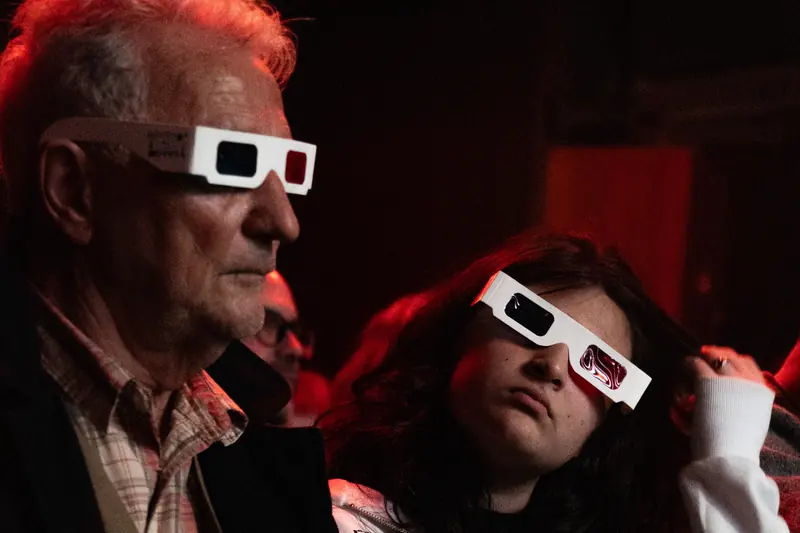
“A form of ritual that enables a connection between art, science and the audience.”
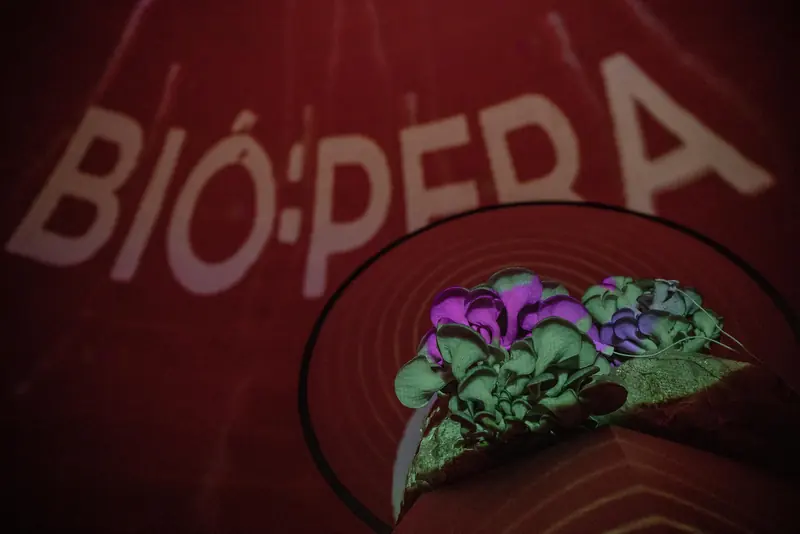
“A multisensory experience generated by fungi and humans, live.”
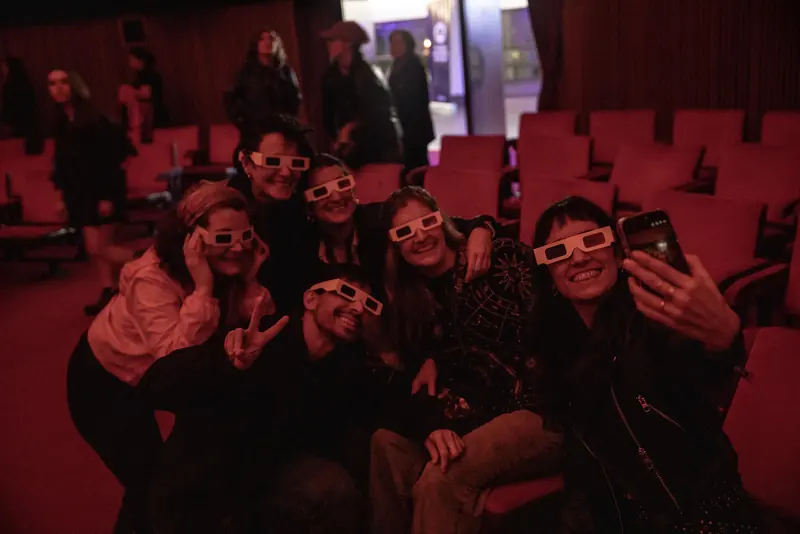
“The audience's response left no availability in the capacity set aside for the performances.”
An experimental bioart opera with live fungi, at the intersection of live cinema, sound art and interactive art: a stage work with music, soundscapes, dramaturgy and staging, in which the electrical activity of living fungi is material for co-creation. Created by Alejandro Sorin and Federico Seineldin, with Darvin Elisondo on stage. It lasts 60 minutes: a prologue of about fifteen minutes and the work.
Everything you need is told in the prologue: what the fungal kingdom is, how a fungus's signal is read and why the project exists. Then the work invites you to let go.
Yes. At the center of the stage there is a substrate colonized by mycelium with fruiting bodies, and electrodes record its electrical activity without harming it. The fungi are grown or sourced locally in each city where the work is performed, in coordination with the host venue: no living organisms are transported between countries.
Cultivated fungi. The work uses their electrical activity, which the audience perceives through sound and image: the experience is one of listening and looking.
The translation of the electrical fluctuations of living fungi into sound and image. Two contact electrodes pass a minimal current through the fungus and a sensor measures how its conductivity changes from moment to moment; each fluctuation that crosses a threshold becomes a note or a control voltage, and those events are mapped to sound and image parameters in real time. It is electronic synthesis from a biological signal, in the same language as modular synthesizers.
Announced performances appear in the dates section, with the link to each venue's ticketing. With your email and your city, we will let you know as soon as there is one nearby.
Merch
Postcards and stickers printed in stereoscopic 3D: with the glasses from the performance, the fungus lifts off the paper.
Available at every performance. Coming soon, online too.
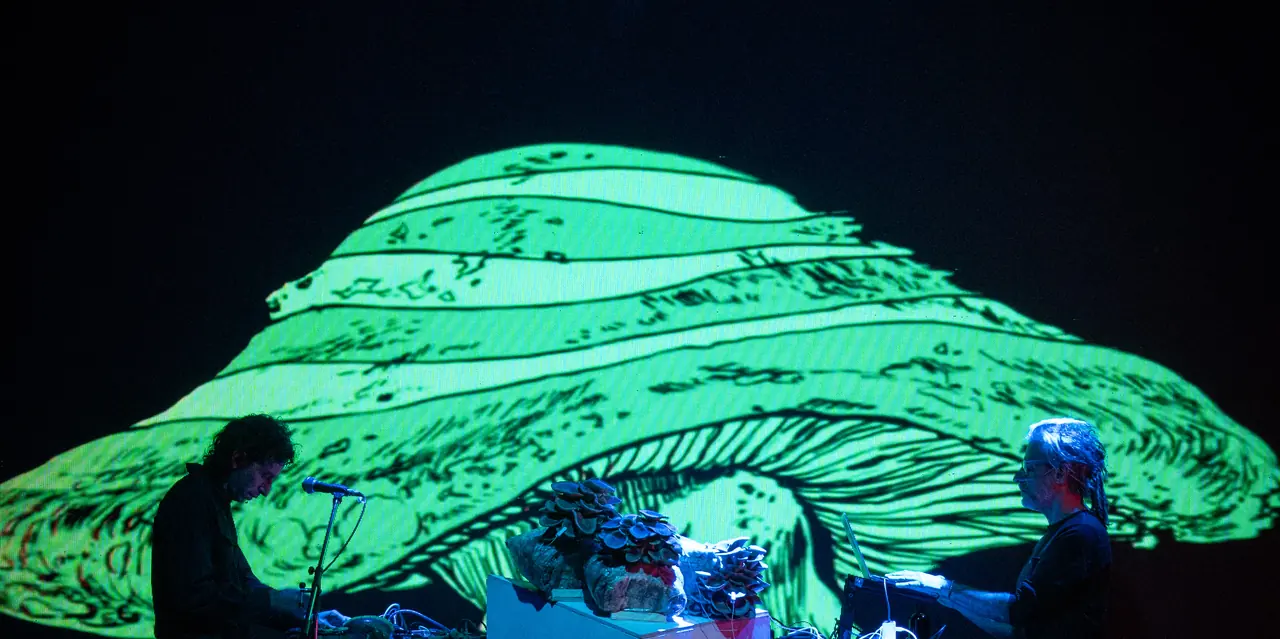
For theatres, festivals, planetariums, museums and events: the work adapts to each space, and everything needed to evaluate a date is on its page.
The work includes stereoscopic 3D projection, high-intensity light visuals and low-frequency strobe effects. It is not recommended for people with photosensitive epilepsy or sensory hypersensitivity. Recommended for ages 8 and up.